Volume 6 Issue 2: Tool Corner - Hoof Tester
 [print this page]
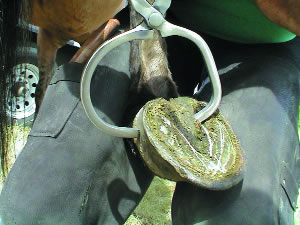
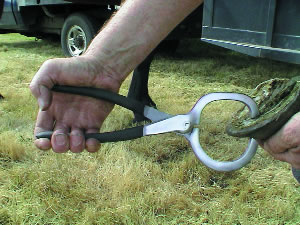 Most seasoned farriers will agree that a good hoof tester is a must in your shoeing tool collection. When used properly you can determine an area where a hoof has pain. The key thing here is to know how to use them correctly. Assuming that we have chosen the foot that is affected, the first thing to do is clean up the feet. I almost always start with the sound foot first. This allows me to get the feel of a normal squeeze for that horse. Before picking up the foot take a good look at the outside. Make sure the wall is free of mud, manure or hard dirt that will hinder the hoof tester from working properly. Is there any sign of hoof wall cracks or an inflamed coronary band? If not pick up the foot and clean the bottom.
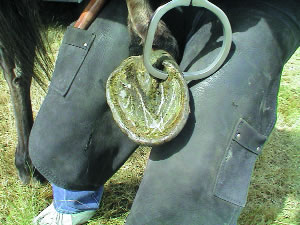
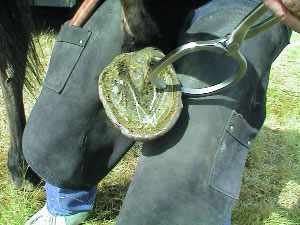
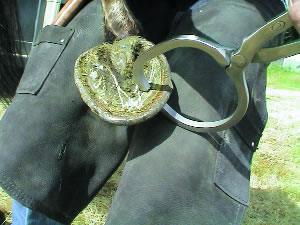
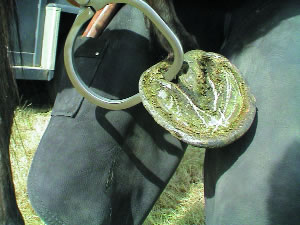
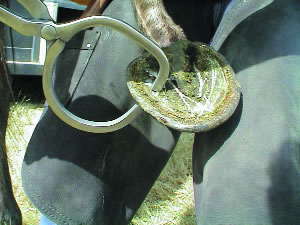
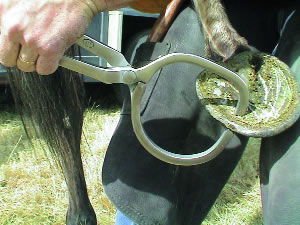
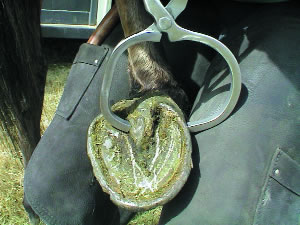
It is very important to have a routine when using hoof testers. If you have never used a hoof tester before I think you should practice first on a small ball. Tennis balls are great for this. A tennis ball will give a little just like a hoof. Squeeze the ball until you have the ability to apply the same pressure each time your hands close the handles. I still do this occasionally just so my hands are familiar with that feel. I start on the outside of the foot just behind the bar and squeeze. Move from that area forward about an inch squeezing with the same amount of pressure. Continue around the foot ending up just behind the bar on the inside of the foot. If you find an area that the horse reacts to don't stay in that area and continue to squeeze. Continue around the foot then start over to see if you get the same response in the same area. If you are sure this is the spot you have to determine if it is your job or the vet's to continue. If I feel it is a hot nail I pull the nail and let the caretaker of that horse know what to do. Even if I am sure what is causing the sensitivity, I suggest that the vet be called and informed of the problem. I do not start digging on the bottom of a hoof. This could be a very negative thing to do. If I do not get a reaction on the sole then I squeeze each side of the frog and across both heels. One point I would like for every one to remember is that the side of the hoof tester you don't see is also working and applying pressure to the outside of the foot with every squeeze. For this reason I like to keep that side no higher than about one-third the height of the foot or where our nails should be. If you get higher than that (especially on a thin walled horse) the horse may show pain in the outside and you may mistake it for sole pain. As with every horse I feel if we observe the horse while being led from the stall, working and or just standing before we start to work on it we may be able to determine where the problem is. Look close, pay attention, and develop your eyes and ears. Practice using your hoof testers on a tennis ball before using them on a horse and you will be more successful finding the sore spot on a hoof.
As farriers, we should always recommend a vet be called when there is a lameness issue. Do what you can to help identify problems but don't set yourself up for problems should your analysis be incorrect. Particularly when the problems are internal.
 |
 |
 |
 |
 |
 |
 |
 |