The Busy Season is Not Over

You are still in the peak season, it’s still hot and there is a lot of work to do. Sound about right? One thing you don’t want to deal with is unreliable product or supply! FPD is staying fully stocked with our major products, like Liberty Nails (including 5 Combo Slim), Bellota Rasps and Kerckhaert Horseshoes, (including the Standard series). It’s called a supply chain for a reason and you depend on a good one with no broken links. If the product is not getting to you now it’s a broken system and this is definitely not the time for that to happen. If you are looking for reliability – check with your FPD dealer for options you can count on. There is a lot of pressure on the suppliers to keep up with demand but we have what you need and are shipping every day to our dealers.

Posted in Products, Stores | Comments Off on The Busy Season is Not Over

Proper Vettec 210 Cartridge Tip Application

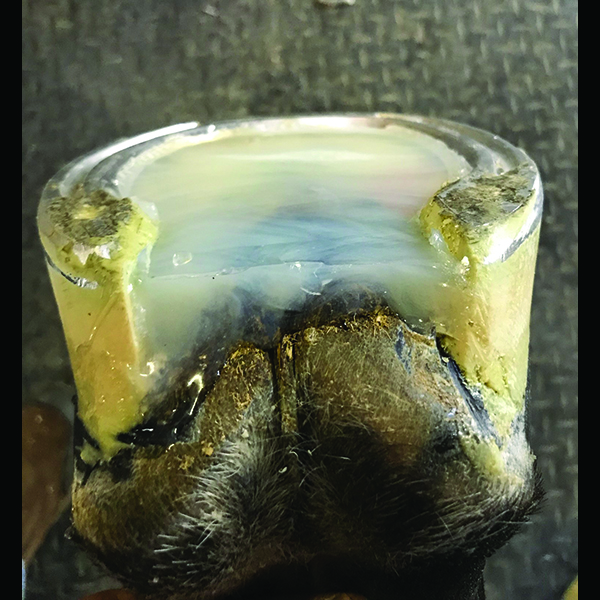
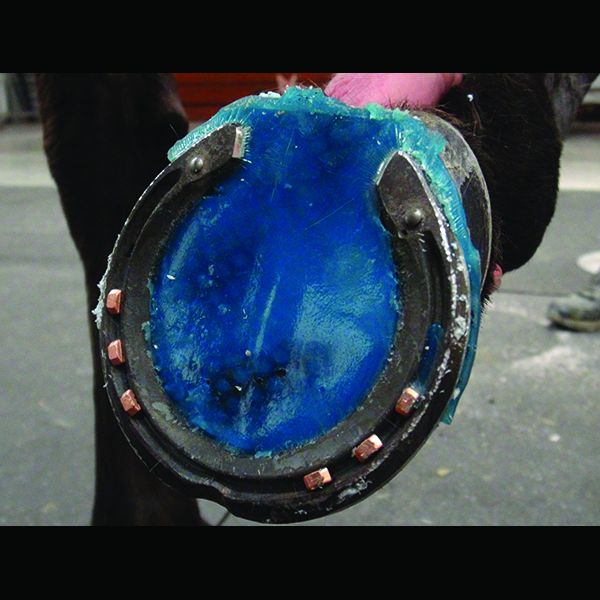
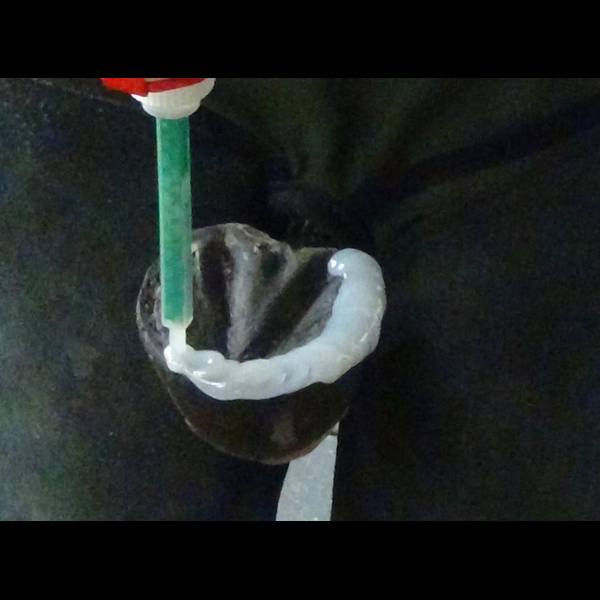
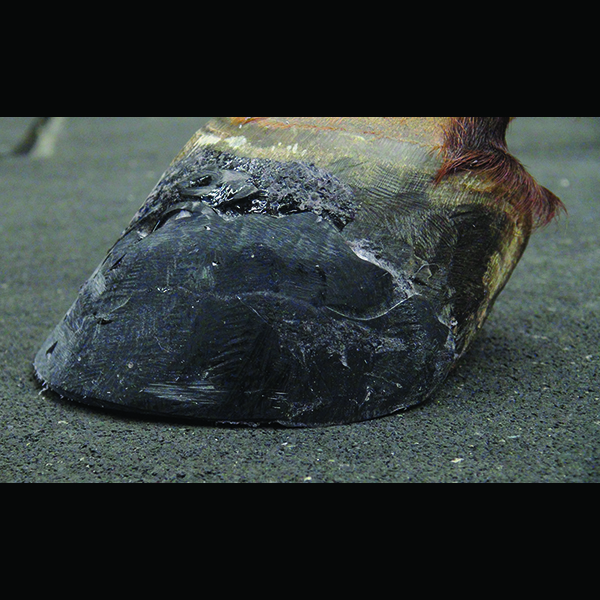
There have been a number of questions from individuals who were not aware of the proper mounting of tips on the Vettec 210 cartridges. Below are some images to help clear up any questions you may have. Be sure to like and follow FPD on Facebook @farrierproductdistribution for educational videos on this topic.

FPD FootPro™ Shop Vettec Gear

7. Put the locking collar on – twist a quarter turn and the cartridge can now be stored without any risk of leaking.

Posted in Tips | Comments Off on Proper Vettec 210 Cartridge Tip Application

New Video Releases from FPD

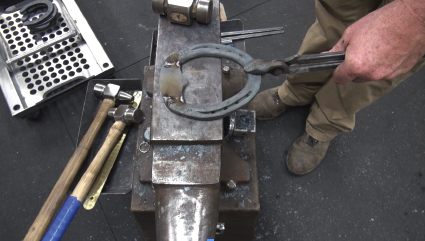
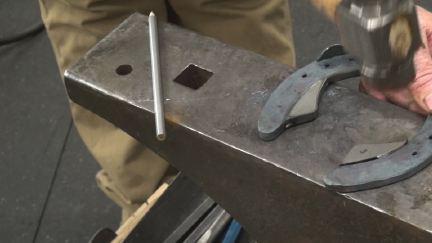
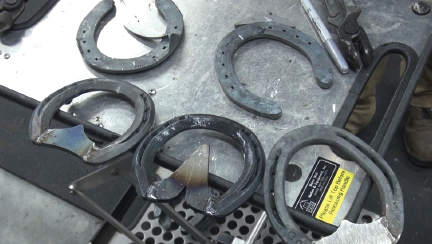
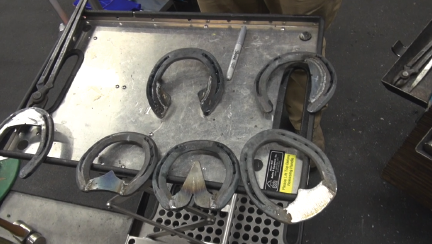
Check out new video releases featuring Diamond Horseshoe Inserts on FPD’s Facebook Page. Be sure to like and follow FPD on Facebook @farrierproductdistribution for educational videos and product information from the pros.

Posted in Products | Comments Off on New Video Releases from FPD

Back on the Road: Carefully

by Dan Burke

Like many people everywhere the FPD sales team has been off the road, but we are now planning some trips for “small group” visits. Last week I ventured out on a cross-country trip and wanted to share some photos along the way. Don’t be disappointed if you don’t see any pictures of product on store shelves; this trip had a lot more interesting stuff going on as I drove across the US.

I sure didn’t get carried away with the feeling of freedom – no sit down restaurants or pool parties for me! Just amazing scenery, meals bought at grocery store delis, etc..🌅 If you have a few days away from work, getting out and about in your state and enjoying the beautiful country we live in might be a great break from hanging close to home.

There’s serious stuff going on, it’s no joke or hoax and we advise plenty of social distancing and just plain being smart, but the path I took from Kentucky to California made that pretty easy to work out.

We are very fortunate to be in an industry that has been relatively stable and kept going through these past couple months. Thank you for the work you do – you are appreciated! Enjoy the photos from my trip below and view captions on our Facebook Page @farrierproductdistribution.

Posted in On the Road | Comments Off on Back on the Road: Carefully

Vettec Improvements

by Larkin Greene

Twenty-two years ago, Vettec introduced advanced urethane adhesives to the equine market, aimed at restoring compromised hoof structure, as well as protecting and supporting the foot.

With the development of pour-in pads and rapid setting repair materials, most would agree Vettec created a revolution not seen since the introduction of the keg shoe. Farriers no longer had to cobble together adhesives from construction, automotive and marine applications, though it did make for some interesting stories. With materials specifically designed for equine applications, farriers could do two things that were previously all but impossible: quickly and reliably put foot back on a horse, and protect soles and frogs without the need for a physical pad.

Polyurethanes are well suited to equine applications because they are very durable, can withstand both stress and strain as well as impact, and are exceptional at lessening vibration. Unlike methacrylates, urethanes are non-­flammable, produce almost no vapor, and do not chemically attack the substrate (hoof wall) in order to achieve a high strength bond. Add in the 30 to 60 set time, and it opens up a world of possibilities.

The new 210cc Vettec cartridge features a leak-free design, holds 30% more material and is easier to open and dispense.

Pour-in pads became popular for four reasons: Protection, support, vibration dampening, and quick, easy application. As a durable, yet flexible protective layer, a horse in challenging terrain can step on the sharpest rock without even knowing it, promoting more confidence, and curbing hesitant behaviors. The ability to vary fill levels, and create enhancements like frog support and stepped pours, gives practitioners more options for successfully treating therapeutic situations like caudal heel pain, laminitis, founder and navicular syndrome. Full fills provide horses more physical surface area to stand on, and more surface area for distributing weight, helping to ease the load on the perimeter hoof wall. Partial and combo pours provide options for supporting specific areas with firm materials while cushioning more sensitive structures with softer formulations. More recently, pour-in pad materials have been used to customize hoof boots to improve internal fit and eliminate the shifting so often associated with lost boots. Boots can also be modified externally with wedging and extensions, making them a good option as a removable therapeutic device.

Materials like Adhere and Super Fast offer many ways to augment a shoeing package, or restore the foot itself with less complicated methods. Aside from repairs that are capable of holding nails and clinches, these materials are great for gluing on steel, aluminum and synthetic shoes, or building a custom shoe directly on the foot in a matter of a few minutes. Heel angle corrections and elevations are a breeze with the simple application of a bead from the heel buttress tapered into the toe quarter; with the stroke of a rasp, the desired pastern alignment can be easily achieved. The superior bond and speed of Super Fast means that foal extensions can be customized, layered, and altered throughout the treatment phase rather than simply gluing on a pre-made cuff. And, if something on the rig breaks, chances are pretty solid that it can be fixed without the need for baling wire and duct tape.


This article is from The Natural Angle Volume 17, Issue 1. For more Natural Angle articles and tips, click here.

Posted in Uncategorized | Comments Off on Vettec Improvements

Keeping Up in Tough Times

By Dan Burke

There’s no doubt the system and some good equipment helps us get the job done well.

We had inquiries in recent weeks about how FPD will handle the challenges of servicing our customers and the farrier industry with the complications of the Covid19 Pandemic. Of course we start by asking that everyone, everywhere do everything possible to stay healthy and safe, and help keep your families, customers and others the same.

We and most of the FPD Dealers have been allowed to continue controlled operations as a result of our roles in the agricultural and animal health industries. Our staff is using common sense and abiding by health directives from our Governor in order to be able to continue. We feel fortunate, but at the same time cautious as we know this can change.

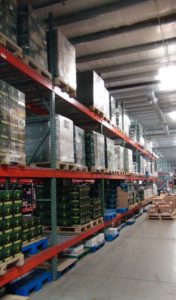
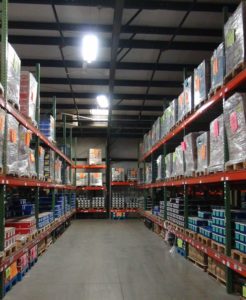
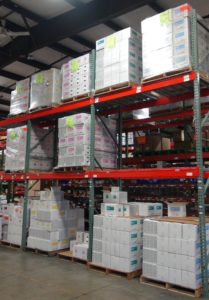
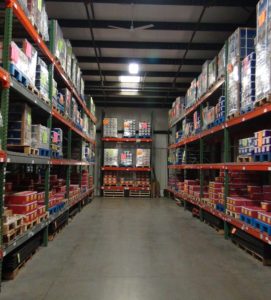
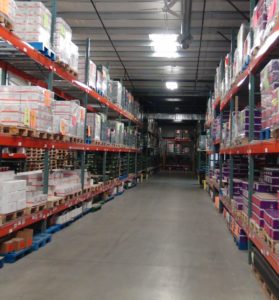
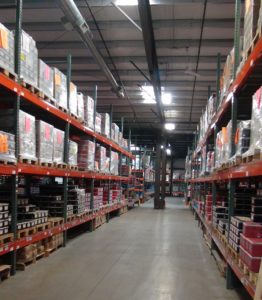
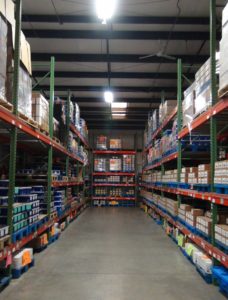
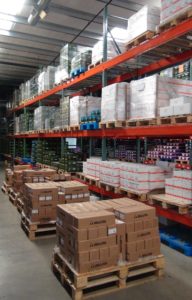
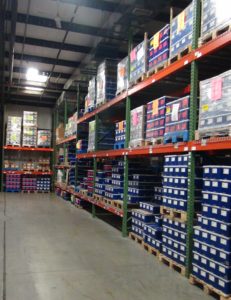
FPD has always worked with a common sense approach to inventory control, using sophisticated software to assist; as do our vendors here and abroad. We don’t work with “just in time” as a goal- though we do work to maximize turnover as any business should. Our approach has proven for 30 years that you can be the best (ask any FPD dealer who their most reliable vendor is), simply by using common sense and good planning. We expect to be able to continue to supply the market with Kerckhaert shoes from Holland and their other production facilities, Liberty nails and many other lines like the Bellota rasps and hand tools. Have a look at some images from our warehouse and you’ll get a sense of what over 2 million horseshoes, 26 million horseshoe nails and tens of thousands of rasps look like. Containers and truck shipments are coming and going from our warehouse and the factories are operating at levels necessary to keep us stocked.

So let’s not worry about availability of our products, just use every caution in whatever you are doing to avoid getting or spreading the virus- and always take care of your people. If you ever come through our area- please call and plan a visit (after all the current pandemic conditions are over). As always, thanks for your support.

Inventory planning – it is a never-ending process, but it is how the FPD purchasing staff keeps us out of stock level problems.


Posted in Uncategorized | Comments Off on Keeping Up in Tough Times

Winter Traction Tips

by Bob Schantz

Winter can create traction problems for horses, and therefore for farriers charged with their care. Care should be used when deciding how much traction is needed. Excessive traction can create torque to the limbs, too little allows the horse to slip or fall. In addition to forged caulks, there are four primary traction devices that you can apply to horseshoes:

  • Borium Head Nails
  • Drive-in Studs and Pins
  • Screw-in Caulks
  • Borium or Drill Tek

Each type of traction device requires special skills and knowledge for proper application.

Techniques for Applying Drive-in Studs

  1. Be sure to use the exact size drill bit the manufacturer dictates. If the hole is too small, damage will occur to the stud when driven. If it is too large, the stud will quickly loosen and dislodge.
  2. Do not drive the stud to the bottom of the shoe. The shaft of the stud is tapered and will tighten as the hoof bears the weight of the animal. If you drive it to the bottom of the shoe the stud will loosen and dislodge. Leaving about 1/8” will help ensure the studs remain where you put them.
  3. As with the nails described above, do NOT use your good hammer to drive the studs into the shoe. Either keep an old hammer for this purpose or place a piece of flat steel on top of the stud and hammer on the steel.

    Watch Mike Wildenstein, CJF, FWCF (hons) present a how-to video for the application of Tungsten Carbide pins and studs on FPD’s YouTube Channel.

Techniques for Using Borium Headed Nails

  1. These nails will give some traction for the horse that will only occasionally be on frozen asphalt roadways. They are the easiest traction to apply. During the nailing process, you may choose to use between 4 and 8 nails per shoe. The more nails, the greater the traction.
  2. Because of the hardness of the Borium, damage will occur to your hammer. Therefore you should NOT use your good hammer. Use an old driving hammer in place of the good one.


This article is from Tips from the Pros in FPD’s Field Guide for Farriers. Find more farrier education articles, videos and tips at www.farrierproducts.com.

Posted in Products, Tips | Comments Off on Winter Traction Tips

Establishing Customer Policies

It is unlikely that you set customer policies and firm scheduling criteria when you began shoeing. Any work was welcome and uncomfortable conditions did not cause you great concern. However, as you established yourself and developed your skills you probably began to notice (and become more irritated with) less than ideal working conditions and customers. We have a few ideas for those of you in the early stages of your career and perhaps some of you who have “been around.”

Working Conditions
Dave Farley has talked about 5 factors in working conditions and their importance to doing the best work possible. He explains to his customers that if any of the conditions are less than desirable it will make his final job more uncertain. He has found that customers will try to improve conditions if you present it to them in this way.

  1. Clean work area
  2. Dry work area
  3. Flat work area
  4. Well lit work area
  5. Well behaved horse

Attach 20% value to each requirement and let your customer know you can work up to 100% of your ability if all are met. If any are lacking, your final job may not be 100%. Be especially firm with the well-behaved horse category. It is a tough, risky job with a good horse. The dangers to your physical and financial well being are magnified greatly by an
unruly horse.

Payment
Cash flow is important in all businesses. You need to establish firm policies on payment. Our recommendation is payment on completion of work if this is possible. If you choose to bill, develop a habit of invoicing at least weekly, if not daily, and request payment in 10 days, 30 maximum. The shorter you can keep the payment period the stronger your cash flow will be. If you wait to do monthly statements your cash flow is strained, even if your clients pay promptly after receiving the statement.

If you choose to do work on account be firm with your terms, regardless what they are. Don’t let your customers get in the habit of paying late. After all, you are running a
business. You need to remember this in dealing with your suppliers. They have an even tighter margin and depend on your payments to keep inventory and service levels up.

Scheduling
If you can develop scheduling policies you will find you have much better control of your business and profitability. Stress the importance of regular hoof care. You might find a six week rotation to be ideal but be flexible with your customers that are not professionals. If you can get them to agree to 7-8 weeks or less you will find this to be important. Efficient management of time is your benefit and the good condition of the hoof is your customer’s.

  • Set realistic schedules and allow enough time for the unexpected.
  • Stick to your schedule and communicate with your customers if conflicts come up. Don’t make a habit of changing your schedule. If you have customers that are willing to get on a schedule you owe it to them to do everything possible to be there – on time.
  • Make sure your customers understand your requirements if they can’t meet a scheduled appointment. Set a requirement for advance notice of any deviation from schedule.

The information you collect in a database will be useful in setting up schedules and implementing policies. It is also invaluable to your communications efforts.

These policies enhance your service to your customers and increase your efficiency- the key to improving your profits.

This article is from The Natural Angle Volume 4, Issue 2. For more Natural Angle articles and tips, click here.

Posted in Uncategorized | Comments Off on Establishing Customer Policies

Power Up: Power Cord Tips

If your tools and electric motors are getting hot and you are connecting them with an extension cord, it is a possible sign that you have the wrong gauge extension cord. Not only will the use of the wrong extension cord reduce the performance and life of your equipment, it can also become a fire hazard.

Before using any extension cord to help power your tools or equipment, ask yourself the following questions:

  • Will I use the cord indoors or outdoors?
  • What is the total wattage rating of the equipment I’ll use with the cord?
  • How far is the nearest outlet from where I’ll be working?

The first step in determining which extension cord you will need is to decide whether you will be using the equipment indoors or outdoors. Extension cords that can be used outdoors will be clearly marked “Suitable for Use with Outdoor Appliances.” Never use an indoor extension cord outdoors; it could result in an electric shock or fire hazard. Most barns have conditions that would also indicate outdoor use cords would be safer.

Extension cords are labeled with valuable information as to the use, size and wattage rating of the cord. Cords are offered in many lengths and are marked with a size or “gauge.” The gauge is based on the American Wire Gauge (AWG) System, in which the larger the wire, the smaller the AWG number. For example, a 12-gauge wire would be larger, and can power larger wattage equipment than a 14-gauge wire.

To determine what size — or gauge — cord you will need, you will also have to determine how long you need the cord to be. A cord, based on its gauge, can power equipment of certain wattage only at specific distances. As the cord gets longer, the current carrying capacity of the cord gets lower. For example, a 16-gauge extension cord less than 50 feet in length can power up to 1625 watts (W). A 16-gauge cord that is longer than 50 feet in length can only power equipment up to 1250W.

All equipment should indicate how much wattage is consumed when operated; that rating can be found on the equipment itself or within the use and care booklet that accompanies the product. Other equipment will indicate power usage in amps, rather than watts. Quick tip: if your equipment indicates that it uses 5 amps at 125 volts, then its wattage rating is 625W (5×125). If you are going to use the extension cord with two or more pieces of equipment, you must add together the wattage rating for all equipment used on the cord. The total of those wattage ratings will help you determine which gauge size you will need.

If you are working in a barn, the outlet that you may be using may have low voltage, because it may be at the end of the line. If this is the case you will need a larger gauge extension cord to prevent additional drop in voltage.

Always try to connect to the plug nearest to the breaker box in the barn. It has the least drop in voltage!

Follow these additional safety tips when using extension cords with any electrical appliance.

  • Look for the UL Mark on extension cords you purchase.  The UL Mark means that representative samples of the cord have been tested for foreseeable safety hazards.
  • Store all cords indoors when not in use. Outdoor conditions can deteriorate a cord over time.
  • Never keep an extension cord plugged in when not in use. The cord will still conduct electricity until it is unplugged from the outlet.
  • Most newer, indoor cords with more than one outlet have covers for the unused openings – use them. Children and pets face serious injury if they chew on unused outlets or stick sharp metal objects into the openings.
  • Do not use extension cords that are cut or damaged. Touching even a single exposed strand of wire can give you an electric shock or burn.
  • Never file or cut the plug blades or grounding pin of an extension cord or equipment to plug it into an old outlet.
  • As a safety feature, extension cords and most equipment have polarized plugs (one blade wider than the other). These special plugs are designed to prevent electric shock by properly aligning circuit conductors. If a plug does not fit, have a qualified electrician install a new outlet.

This article is from The Natural Angle Volume 9, Issue 3 . For more Natural Angle articles and tips, click here.

Posted in Tips, Uncategorized | Comments Off on Power Up: Power Cord Tips

Basic Shoeing: Shoeing The Roping Horse

by Mike Chance, CJF

There are as many ways to shoe roping horses as there are horses. Each one is unique, with its own strengths and weaknesses.

A sound horse with good conformation, in a desirable environment, would do well barefoot. Yet this scenario is rare. Their riders each have their own set of priorities, skill levels, and schedules to factor in. Because of all these variables, each horse should be assessed as a unique individual. Communication and observation skills are essential in determining how best to shoe each horse in order that he may perform at his peak within his environment. For instance, you would not put sliders on a calf horse that chased cur dogs and wild cows during the week. You wouldn’t square a toe and dub his hind foot if he were weak in his stop. These are all factors you must learn through communication with rider/trainer and or using your observation skills. You should have a good understanding of the horse’s job description.

The average age of the rope horses you see at the top end of the game is 15-18 years old. Many of these horses reach the peak of their career with existing maladies and management of soundness is the key factor of these horses. These horses will work temporarily, regardless of what we do to them, as seen in Photo 2.

The most common concern of cowboys is shoe pulling. Rarely does a horse of sound mind and body pull a shoe, if the foot is properly balanced and supported. Photo 3 (same horse as Photo 2 after shoeing) In fact, it is less likely under normal circumstances. I choose not to cheat any horse of the advantages of proper shoeing because of occasional lost shoes.

Chronic shoe pulling is most often caused by bad management, such as turning them out in hazardous environments, such as deep mud, fencing on the ground and so on. This is not your fault, unless you don’t point it out and show customers their roles and responsibilities. The management of the equine athlete is a team effort.

Lameness is a common cause of gait faults. Veterinarians play a key role and can make life less stressful, provided you’re fortunate enough to have a good relationship with the good doctors in your area. It’s amazing how a chronic shoe puller is miraculously cured by a simple hock lubrication. Calf horses, like reiners are notoriously hard on their hocks. It comes with the job.

Over the years of practice and study, I’ve developed a picture in my mind of a balanced and functional foot. Good basic hoof prep with a little extra attention to details will solve most problems and keep a horse sound under normal circumstances. (Photo 4) This is my approach to what some refer to as corrective shoeing. In general, I simply trim away the parts that do not fit the balanced picture. I take away all the excess hoof, but avoid excessive trimming and rasping. Your goal should be to preserve as much hoof mass as possible. Trim heels to the tallest, widest aspect of the trimmed frog. The frog should be somewhat parallel to the ground. While dressing the outside of the hoof, keep your goals in mind.

Fit a shoe that compliments what is trimmed. I often choose a shoe based on the hoof’s condition, allowing me to use a smaller nail, for example. I prefer a shoe that is punched coarse. This allows me to nail in the white line, yet still fits the outside perimeter. Hoof walls will become thicker and of better quality if we allow them to. Rasping on the outside of the foot serves no practical function. Your shoe fit and its placement is what does the work (Photo 5).

A horse is a horse. It makes no difference what his job is: dressage, walker, or ropers, they need the same trimming principles. The center of the foot is the same respectively. The posterior portion of the foot must balance the anterior regardless of the length of toe and/or hoof conformation (Photo 6). Enhanced break over is very important, yet it’s only part of AP balance. Posterior support is the other half of the equation and must be addressed to achieve AP balance. Think about the posterior portion of the foot, the portion that bears the weight and does the work (Photo 7).

Proper hoof prep and shoeing of the hind feet is just as important as the front. If not, a sore or dysfunctional hind can dump extra work to the front and set you up to fail. In order for a horse to stop properly, the hind foot must slide. If the foot is excessively dubbed or pushed back, it won’t function properly. On the other hand, excessive toe length isn’t   necessary and can cause undo stress on the limbs. Somewhere in the middle is where I find works well (Photo 8). One quarter inch to 3/8” longer than the fronts is a good place to start. There should be enough toe and or shoe in front of the center of the foot to allow it to stay on top of the ground going in. The heels of the hind shoe must be of sufficient length to slide on once it’s under the horse. It is sometimes necessary to sweeten or taper the branches of a hind shoe to enable the heel of the foot to fall while the toe stays on top of the ground. The opposite drives the toe straight in, therefore you don’t get the slide you want. Anything you do to facilitate the sliding stop makes it easier on the horse as well as the ropers ability to step off (Photo 9).

A hind shoe of adequate length also helps keep them off the front shoes. The extra length causes the hind to plant a little sooner. A horse that spreads excessively in the stop can’t stay in it. Check medial/lateral hoof balance and make sure your shoe is pointed straight with the frog (Photo 10). It’s sometimes necessary to lower the medial heel and build a shoe with a little extra length in the medial branch (Photo 11, 12).


The more educated we are the more confidence we have. We are more able to communicate with confidence, what we do and why we do it. Education and experience is the key to success but also helps you to know your limitations. Nothing is more frustrating than giving your all to a customer with unrealistic expectations. If you learn to listen well and observe, you can pick out the things on which you can have an impact and alleviate complications and disappointment. Education gives you the confidence and skill to handle this aspect of your job well and to your advantage.

This article is from The Natural Angle Volume 7, Issue 1 – written by Mike Chance, CJF. For more Natural Angle articles and tips, click here.


Mike Chance, CJF

Mike is living in Tioga, TX and has been shoeing full time since 1985. He has always been active in participating and promoting educational opportunities. He has served as President of the Oklahoma Farriers Association as well as serving on the Board of the AFA. He continues to work with the AFA certification program to help farriers working to improve their skills.

While Mike’s work is now divided between Cutting, Western Pleasure and halter horses, over the years he has worked in many other disciplines, as well. His presentation focuses on a common sense approach to everyday work and maintaining soundness in performance horses.

Posted in The Hoof, Tips | Comments Off on Basic Shoeing: Shoeing The Roping Horse